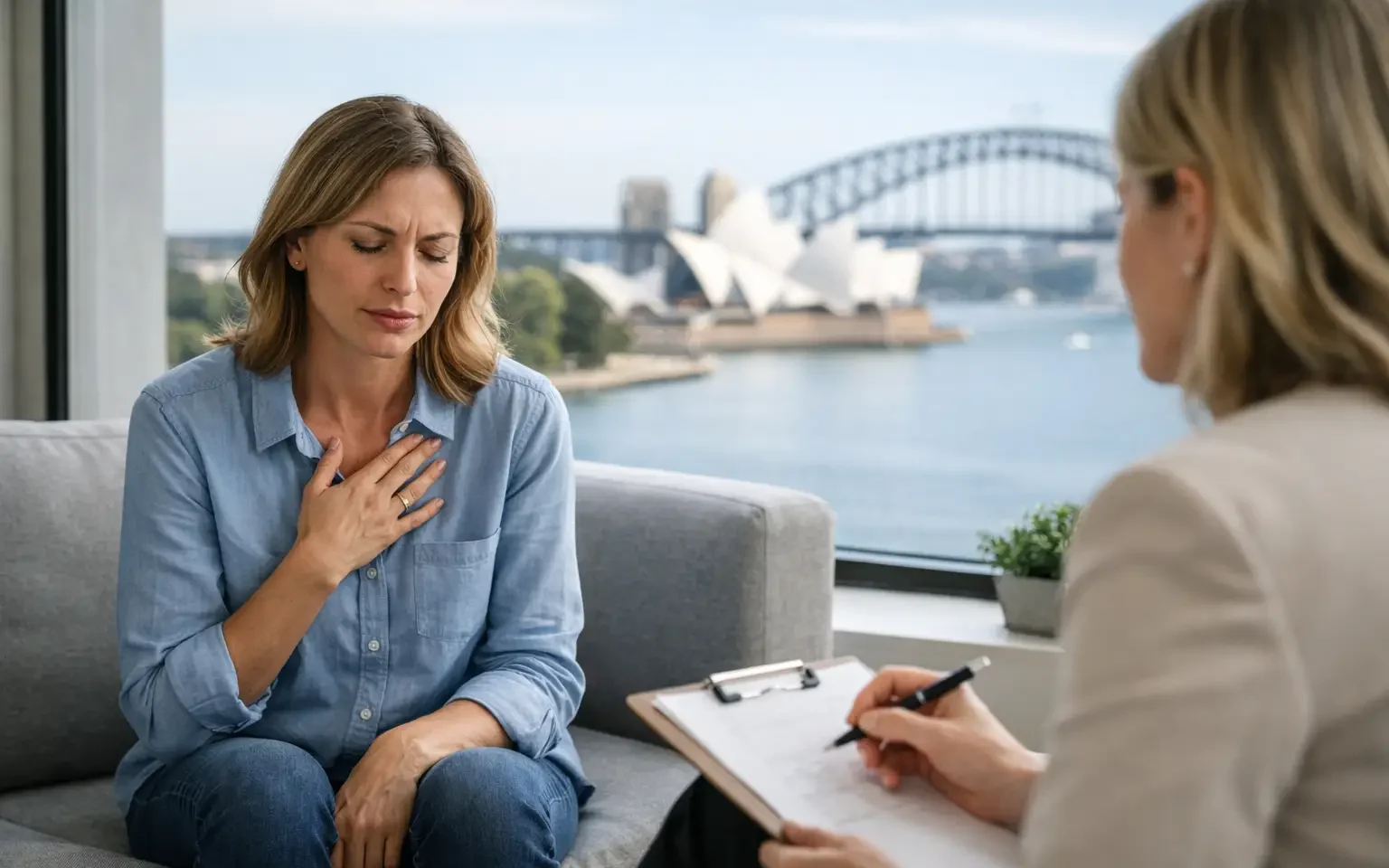
Claustrophobia Treatment in Sydney That Helps
A crowded lift before a meeting. An MRI appointment you have put off for months. A packed train that stops between stations. For someone living with claustrophobia, these are not small inconveniences. They can trigger an intense, immediate fear that feels far bigger than the space itself. Claustrophobia treatment in Sydney can help you understand that response and build practical ways to regain control.
Claustrophobia is a treatable anxiety condition. You do not have to force yourself through frightening situations, avoid more and more of daily life, or wait until a particular event becomes unavoidable. With the right support, it is possible to respond differently to the physical sensations, thoughts and situations that currently set off the alarm.
What claustrophobia can look like in everyday life
Claustrophobia is often described as a fear of small or enclosed spaces. In practice, it can be more varied. Some people feel distressed in lifts, tunnels, aircraft cabins, public toilets, change rooms, crowded shops or rooms without easy exits. Others cope in most enclosed spaces but become anxious when they cannot leave immediately, such as during a scan, on public transport or in heavy traffic.
The reaction can arrive quickly. Your heart may race, breathing can become shallow, and you may feel hot, dizzy, trapped or desperate to get out. Thoughts such as “I can’t breathe”, “I’m going to lose control” or “There is no way out” can make the fear feel even more convincing.
Avoidance brings short-term relief, which is understandable. However, it can also teach the brain that the situation was genuinely dangerous and make the fear stronger over time. You may begin taking stairs well beyond what is comfortable, declining travel, changing jobs, avoiding medical care or planning your day around escape routes. Treatment focuses on interrupting this cycle without dismissing how real the distress feels.
Why claustrophobia develops
There is rarely one simple cause. For some people, claustrophobia begins after a difficult experience, such as being stuck in a lift, feeling confined during a medical procedure or having a panic attack in a crowded place. For others, the fear develops gradually during a stressful period, or seems connected to a broader pattern of panic, health anxiety, trauma or a strong need to stay in control.
It can also be influenced by what you learned early in life about danger, safety and coping. Knowing the origins can be helpful, particularly where a past event still carries emotional weight. But insight alone is not always enough. Effective work also needs to address what happens in the moment: the body’s alarm response, catastrophic predictions and the habits that keep fear going.
How claustrophobia treatment in Sydney works
Good treatment is tailored to the situations that matter in your life. A person whose main concern is an upcoming MRI will need a different plan from someone avoiding lifts in the CBD every day or feeling unable to travel for work.
The first step is usually a clear, respectful assessment. This explores when the fear happens, what you notice in your body, what you predict will occur, how you respond and how avoidance is affecting your work, health, relationships or independence. It also considers whether panic attacks, trauma, agoraphobia or general anxiety are contributing to the problem.
From there, therapy can combine several evidence-based approaches. Cognitive behavioural strategies can help you identify the frightening interpretations that escalate anxiety and test them against reality. For example, feeling breathless in a lift is uncomfortable, but it does not necessarily mean you are running out of air or about to faint.
Learning to work with physical symptoms is equally useful. Rather than trying to eliminate every sensation, you can practise slowing the escalation of panic, grounding your attention and allowing discomfort to rise and fall without immediately escaping. This is a skill, not a test of toughness.
Gradual exposure, at the right pace
For many people, graded exposure is a central part of treatment. This means approaching feared situations in planned, manageable steps while using new skills and staying long enough for the brain to learn something different. It is not about being pushed into the most frightening scenario on day one.
A plan might begin with imagining a lift journey, viewing lifts from a distance, standing near an open lift, taking one floor with a trusted person, then gradually extending the task. The steps depend on your starting point, goals and level of anxiety. Repetition matters because confidence is built through lived experience, not reassurance alone.
There can be some short-term discomfort. That is the trade-off: avoiding anxiety feels easier immediately, while carefully facing it creates the opportunity for lasting freedom. A skilled practitioner helps keep the process challenging enough to produce change but not so overwhelming that it reinforces the fear.
When hypnotherapy may be useful
Hypnotherapy may also be helpful for some people, particularly where the fear response feels automatic or is linked to a strongly held memory or expectation. Used appropriately, it can support relaxation, focused attention and rehearsal of calmer responses. It is not a magic fix, and it works best as part of an individualised plan that includes practical behavioural change.
The most useful approach depends on the person. If trauma is a major driver, it may need careful attention before or alongside exposure work. If panic symptoms are the main issue, treatment may initially focus on reducing fear of bodily sensations. A thoughtful plan does not apply the same technique to everyone.
Practical strategies for difficult moments
Useful tools are most effective when practised before you need them. If you are preparing for a lift, flight, scan or crowded commute, aim to use a small number of strategies consistently rather than searching for a perfect way to feel no anxiety at all.
Start by naming the experience accurately: “My alarm system has activated. I am anxious, but I am not in immediate danger.” Then bring attention to what is actually around you. Feel both feet on the floor, notice several ordinary objects, and let your exhale become slightly longer than your inhale. Keep your shoulders relaxed where possible.
It can also help to replace escape-focused thinking with a realistic coping statement, such as: “This is uncomfortable and temporary. I can stay with this feeling.” The goal is not to argue yourself into feeling wonderful. It is to give yourself a believable response that supports the action you want to take.
Avoid relying solely on safety behaviours, such as always standing by the door, checking exits repeatedly, travelling only with another person or leaving at the first sign of discomfort. These may be useful as temporary stepping stones, but if they become non-negotiable, they can prevent you from discovering that you can cope without them.
Preparing for an MRI, flight or essential appointment
A specific upcoming event often gives treatment a clear focus. Tell the relevant provider about your claustrophobia in advance. Medical imaging services, for example, may be able to explain the procedure, discuss practical options and help you plan the appointment. Follow their clinical advice if medication or a support person is being considered.
Therapy can help you rehearse the situation beforehand, identify likely trigger points and create a realistic plan for each stage. This is particularly valuable when the event cannot be postponed indefinitely. The aim is not simply to get through one appointment, but to leave with skills you can use the next time fear appears.
Getting support that is practical and private
Private, one-to-one support can be a good fit if claustrophobia is affecting your work, travel, health care or everyday choices. Look for a practitioner who takes the fear seriously, explains the process plainly and works with you towards clear, functional goals. You should feel supported without becoming dependent on therapy as the only place you can cope.
At Clear Day Consulting, Jim O’Connor provides individualised counselling, psychotherapy, hypnotherapy and coaching approaches, with a focus on practical, proven strategies that translate into daily life. An initial free 20-minute consultation can help clarify whether this style of support suits your needs.
Fear may still show up as you make changes. Progress is being able to notice it, use what you have learned and continue towards the life, work and freedom that matter to you.