
What Not to Say to Someone with an Addiction
Do you know or are you close to a person in recovery from substance or alcohol abuse? It is a complicated situation with many highs and lows, and sometimes it can be difficult to know what to say.
They already have many of the doubts that you do, so calling things as they are can sometimes have the opposite effect. How can you help your loved one’s recovery?
This article is your guide to navigating the physical and emotional barriers the person you care for is facing, what doesn’t help the recovery process, and how addiction counselling in Sydney can change your life.
What Are Recovering Addicts Going Through?

Whether you have been in their shoes before or not, addiction affects every aspect you of life, and so the experience may be different for your loved one.
Even after completing a treatment program, recovery is not easy. Here are some things to understand about addicts in recovery:
- Addiction can happen at any time
- They did not choose to be addicted
- Mental health disorders can be a cause of their substance use disorder
They are still the person you love under the addiction
Things Not to Say to Someone with Addiction Struggles
A family member, friend, or partner going through drug or alcohol abuse causes unpredictable moods and irrational behaviour, but what should you not say to them?
1. “I know what you’re going through”
Unless you have been through addiction, you do not know what the addict is going through. Even if you have pulled through and recovered from a drug of dependence, your experience was not identical.
Instead, say you are sorry they are going through this, let them know you love them, and be there for them during their highs and lows.
2. “You’ll never change”
Your loved one may have gone through recovery before and relapsed back into addiction. This already brings that person a lot of guilt for going back, so saying this will make them feel worse, and in some cases, heighten their chances of drinking or using again.
It is the cycle of using, feeling guilty, and wanting to forget what they feel guilty for. They already had self-doubt about whether they could remain sober, so it is important to make positive statements like “you can do this” or “I believe in you” for recovery support.
3. “Why can’t you stop the habit?”
A person with addiction already knows how destructive their habit is, and how it ruins relationships, jobs, and family. Asking this question just reminds them of their addiction, the impacts it has, and how they are having trouble stopping.
If they knew how to stop the addiction completely, they would choose to live clean. Instead of asking them why they have not put down the drink yet, ask how you can help.
4. “If you don’t change, I’m done”
Threatening someone with an addiction does not have the effect you are looking for. For some people, the addiction is as much of a mental thing as it is physical.
They might have intentions to walk away from the substance they are abusing; however, they have no control when they are craving it.
5. “I’m ashamed of you”
Saying this makes an addict feel exponentially worse, as they already feel shame towards themselves. Telling your loved one that you feel ashamed of them adds to the verbal abuse they do to themselves.
It can also become a trigger that keeps them in the cycle of alcohol or drug abuse, self-hatred, and more use. Instead, it is wise to encourage the person to get into treatment so they can be the best version of themselves.
6. “Try taking it easy”
When you tell them to use drugs or alcohol in moderation, it is also more harmful than helpful, regardless of where they are in recovery.
Although this advice has good intentions behind it, once a person starts using it, they struggle to stop it. It is a more productive idea to explore treatment options (such as a support group, family therapy, Alcoholics Anonymous, or outpatient treatment) to slowly stop using.
7. “You lack discipline”
Contrary to widespread belief, addiction is not linked to willpower or self-discipline. Although we all have addictive tendencies, we can control these and assume that those with addiction use the same self-control.
Substance and alcohol abuse is completely different as it occurs due to mental health issues (such as alcohol use disorder) or genetic predispositions. Criticising someone for their addiction causes them to feel worse about their situation and they are more likely to use again.
8. “You are so selfish”
A person with addictive behaviour appears selfish, especially if the person you care about makes you feel exploited (such as asking you for money) or manipulated. It is more complex than selfishness.
Addiction makes a person engulfed by substance abuse: a person’s primary goal is getting alcohol or drugs. They do not care about anything else, and here lies the mental illness. It is not their fault.
Other things you should not say:
- “You just need to hit rock-bottom!”. In a sense, you are encouraging the person to use until they reach this point, which is dangerous and potentially life-threatening. Encourage your loved one to attend therapy as soon as possible.
- “Cold turkey is the only way”. Quitting overnight sounds like the dream, but it can have serious health risks. It is one of the hardest, most dangerous way to overcome addiction. Some drugs cause seizures and painful withdrawal symptoms when you stop taking them. A drug and alcohol counsellor is your best bet
- “Your drug addiction is someone else’s fault”. Although friends or family can influence use, it is not the main reason behind the addiction. They do not represent the entire life story.
Clear Day Consulting is Caring and Empathetic
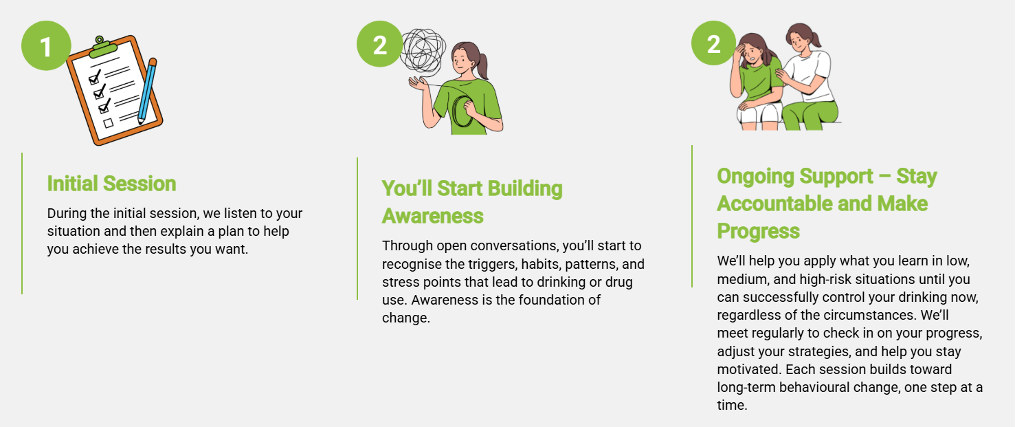
Clear Day Consulting offers drug and alcohol counselling in Sydney that is flexible, practical, and judgment-free.
Clear Day Consulting supports people—including busy professionals—who want to regain control of unhealthy habits. Unlike traditional retreat-style programs, our method fits into your daily life.
You will never feel pressured, and we never make you feel bad for what is going on. We do not label or judge. Instead, we view addiction as a behavioural pattern that can be understood and changed.
With structured coaching, clear milestones, and ongoing support, we help you make sustainable progress without disrupting your routine. All counselling is confidential and fully inclusive.
Do you have a loved one who is open to addiction treatment? Call to book a free 20 min phone consult to discuss how we can help. Our services include alcohol counselling, drug addiction counselling, individual counselling, relationship counselling, and more.
Read our blog: What Happens in Alcohol Counselling?
Require Addiction Counselling in Sydney? Begin Your Recovery
No matter where your loved one is during the recovery journey, Clear Day Consulting believes real change does not require dramatic interventions or stepping away from everyday life. Our step-by-step coaching program is flexible, practical, and designed to fit into your schedule. Sessions can be attended in person, via video, or over the phone, with payment made after each 55-minute session.
If cost is a concern, speak to your GP about a Mental Health Care Plan, as Medicare may subsidise counselling where a mental health condition is present.
Located on Macquarie Street in Sydney CBD, we provide confidential, inclusive, and judgment-free support, from treatment plans to person-first language. Whether you are cutting back, quitting, or simply wanting to feel more in control, we are here to help you move toward sober, stable living—one clear step at a time.
Call 02 9420 0788 to grab your 20-minute free chat or email info@cleardayconsulting.com.au. Recovery is always possible.
Clear Day Consulting is located in Sydney CBD. Our head office is in Macquarie Street Sydney.