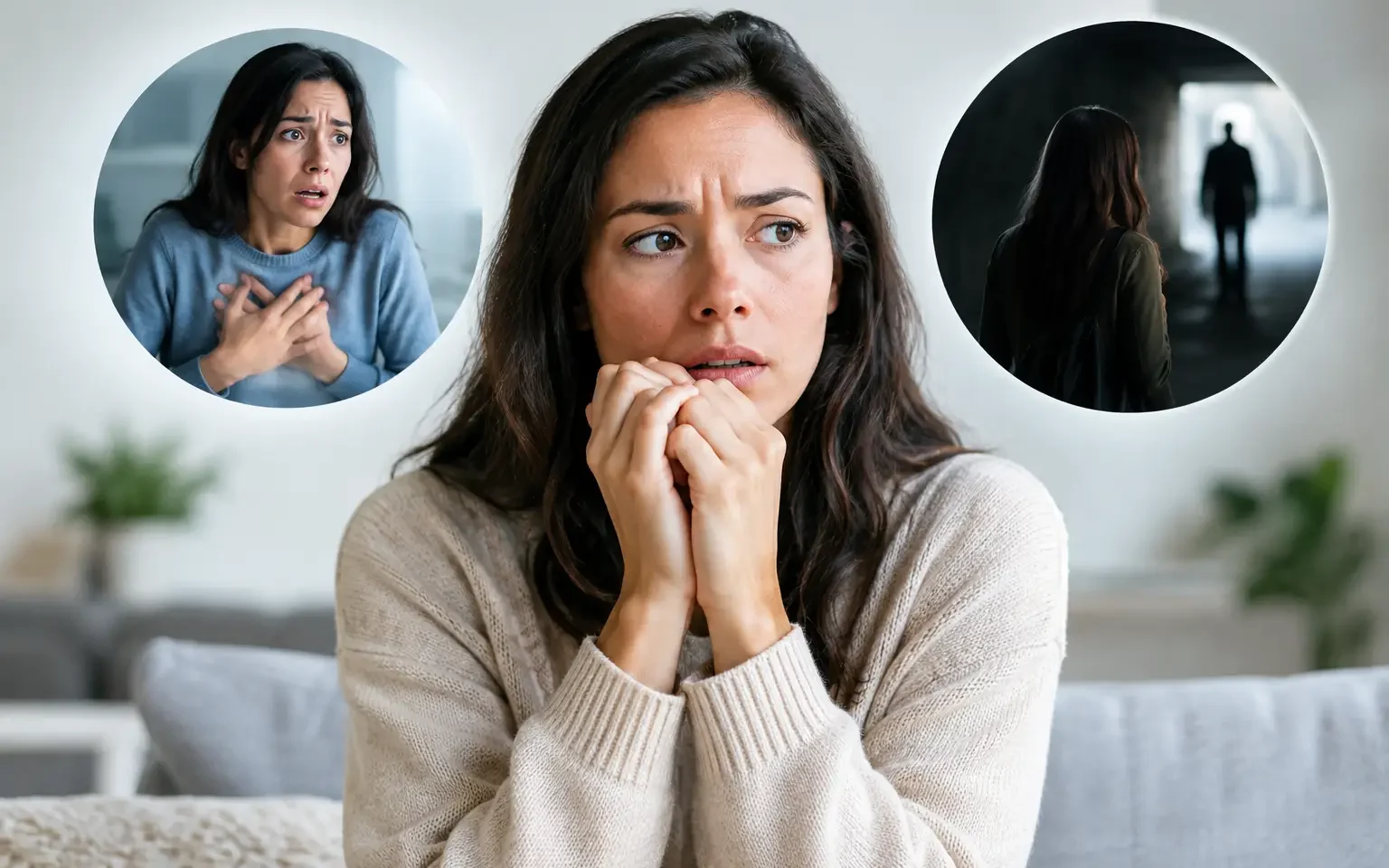
Panic Versus Phobia: How Are They Different?
A crowded train platform, a presentation to senior leaders, a flight, a lift, a sudden racing heart at 2 am – anxiety can take many forms. Understanding panic versus phobia can make a real difference, because while both can feel frightening and limiting, they tend to follow different patterns and respond to different practical strategies.
People often use the words interchangeably because the physical experience can look similar: a pounding heart, shortness of breath, dizziness, trembling, nausea or an overwhelming urge to escape. There is nothing weak or irrational about these reactions. They are the body’s alarm system working too hard, or sounding at the wrong time. The encouraging news is that with the right support and focused practice, this alarm can become far less controlling.
What is panic?
Panic is a sudden surge of intense fear or discomfort. A panic attack can reach its peak quickly, often within minutes, and may feel as though something catastrophic is happening. Some people fear they are having a heart attack, fainting, losing control, “going mad”, or unable to breathe.
A panic attack can happen in a clearly stressful situation, but it can also appear to come from nowhere. You may be sitting at your desk, driving on the M1, lying in bed, or having coffee with friends when your body suddenly shifts into high alert. That apparent unpredictability is one reason panic can become so distressing.
After one or two attacks, many people begin to monitor their body closely. A slight change in breathing or a flutter in the chest may be interpreted as danger. This fear of the sensations themselves can create a cycle: physical sensation, alarming interpretation, more adrenaline, then stronger physical sensation.
Panic disorder is not simply the experience of having a panic attack. It usually involves recurrent attacks alongside persistent worry about having another one, or changes in behaviour designed to prevent one. That might mean avoiding exercise, public transport, queues, meetings, driving far from home, or places where leaving feels difficult.
What is a phobia?
A phobia is an intense and persistent fear of a particular object, activity or situation. The fear is usually linked to a recognisable trigger. Common examples include flying, heights, needles, spiders, driving, enclosed spaces, vomiting, public speaking or social situations.
Most people can identify something they dislike or prefer to avoid. A phobia is different because the fear is disproportionate to the actual risk, causes significant distress, or begins to restrict everyday choices. Someone with a fear of flying may turn down a valuable work opportunity, miss family events overseas, or spend weeks distressed before a planned trip. Someone with claustrophobia might avoid lifts, medical scans, busy trains or particular office buildings.
The body can produce a powerful panic response when the feared trigger is present or anticipated. This is where confusion can arise. A person who panics in a lift may have claustrophobia, while a person who has panic attacks in many unrelated settings may be more concerned about panic itself. In reality, there can be overlap.
Panic versus phobia: the key differences
The clearest distinction is often the focus of fear. With panic, the concern may centre on internal sensations and what they might mean: “My heart is racing, something terrible is happening.” With a phobia, the fear is commonly directed towards an external situation or trigger: “If I get on that plane, I will not cope.”
Panic can feel unpredictable, particularly early on. Phobic fear is more often predictable because it is activated by a known situation, or even by thinking about that situation. A person with a dog phobia may feel relatively calm until they see a dog on the footpath. A person vulnerable to panic may start to feel anxious because they notice their breathing has changed, even in a familiar and safe place.
Avoidance also tends to look different. Panic can lead people to avoid places where escape may feel hard or help may not be readily available. This can be part of agoraphobia, which may involve avoiding shopping centres, public transport, open spaces, crowds or being alone outside the home. A phobia generally leads to avoiding a more specific trigger, such as a lift, dentist appointment or flight.
These are useful distinctions, not rigid labels. A person may have a specific phobia and panic attacks. Someone may fear panic sensations and then develop avoidance that resembles a phobia. A careful assessment looks at the whole pattern: what happens first, what maintains the anxiety, and how it affects work, relationships and daily life.
Why avoidance makes anxiety stronger
Avoidance brings immediate relief. If you leave the meeting, take the stairs, cancel the flight or ask someone else to make the phone call, your nervous system settles. That relief makes complete sense.
The difficulty is that the brain can learn the wrong lesson: “I was only safe because I escaped.” Each avoidance behaviour can make the feared experience seem more dangerous next time. Life may gradually become organised around preventing discomfort rather than pursuing what matters.
This does not mean you should force yourself into overwhelming situations. Sudden, unsupported exposure can backfire. Effective treatment is planned, paced and tailored. The aim is to build confidence through manageable experiences, while learning that anxiety can rise and fall without needing to control every sensation or escape every situation.
Support that matches the problem
For panic, practical work often includes understanding the body’s threat response, reducing fearful interpretations of physical sensations, and learning ways to respond differently when adrenaline rises. Breathing can be useful, but it is not a magic switch. The goal is not to breathe perfectly or eliminate every sensation. It is to stop treating normal stress responses as proof of danger.
A therapist may also help someone gradually test feared sensations in a safe and structured way. For example, a raised heart rate after climbing stairs can become an opportunity to practise a more balanced response: “This is uncomfortable, but it is a body sensation. It will pass.” This kind of work can reduce the fear of fear itself.
For phobias, gradual exposure is often central. This means building a realistic step-by-step plan, beginning with situations that feel challenging but manageable. A fear-of-flying plan might start with learning how anxiety operates, then viewing aircraft images, visiting an airport, sitting with flight-related sensations, and eventually taking a supported flight. The sequence depends on the person, the severity of the fear and the practical demands of their life.
Cognitive behavioural strategies can help identify catastrophic predictions and replace them with more accurate, useful thinking. Hypnotherapy may also be helpful for some people as part of an integrated approach, particularly where anxiety is reinforced by deeply learned associations. The best approach depends on the individual rather than a one-size-fits-all method.
When to seek professional help
Support is worth considering when anxiety is narrowing your world, affecting your work, relationships, sleep or health, or when you are spending a great deal of energy managing the possibility of panic. You do not need to wait until you are avoiding everything before asking for help.
It is also sensible to speak with a GP about new, severe or unexplained physical symptoms, particularly chest pain, fainting, significant breathing difficulty or changes that could have a medical cause. Physical health and emotional wellbeing deserve the same careful attention.
A safe, supportive space can help you understand what is happening without judgement. At Clear Day Consulting, the focus is on practical, proven strategies that build insight, confidence and skills you can use outside the consulting room – in a boardroom, on a plane, on the train home, or during a difficult conversation.
Anxiety often becomes smaller when your life becomes bigger than the strategies you use to avoid it. With patient, focused action, it is possible to make room for discomfort without letting it decide where you go, what you attempt, or who you become.